Solutions
High Ceilings
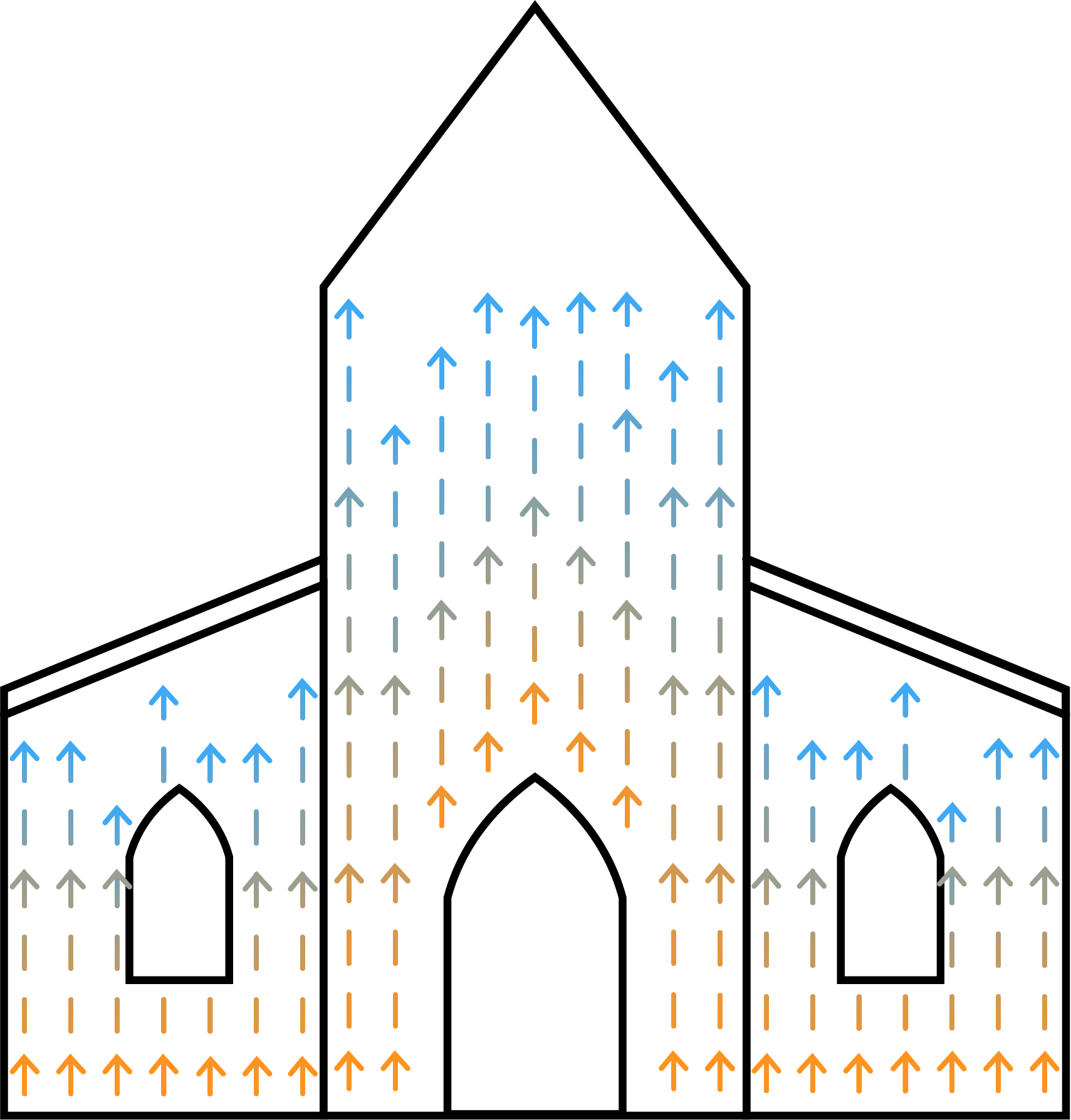
Traditional convection heating relies on warm air rising, reaching the ceiling, cooling, and then descending, creating a convection current that gradually heats a room. However, this process becomes inefficient in high-ceilinged structures like churches, where a substantial portion of the heat dissipates through the roof.
Underfloor heating is well suited to buildings with high ceilings because heat is emitted from the floor where occupants are located. This reduces reliance on warming a large volume of air above the occupied space.
Radiant versus Convective
At "The Future of Heating in Historic Buildings", held in London in 2022, underfloor heating was described as: "where feasible, underfloor heating stands out as the optimal solution for heating churches."
When it comes to installing underfloor heating in a church, two primary methods are commonly employed:
- Installation on the Existing Floor: This involves placing the underfloor heating system on the existing floor, which results in a slight elevation of the floor level.
- Full Excavation: Alternatively, a comprehensive excavation approach is adopted, preserving the existing floor levels while integrating the underfloor heating system.
These two methods offer flexibility to cater to the diverse structural needs of historic churches, allowing for a tailored and effective application of underfloor heating technology.