Dry Systems
From its founding, JUPITER has focused on dry-installed underfloor heating systems that avoid conventional wet trades such as concrete and screed.
This approach is particularly useful in churches and historic buildings because it reduces added moisture and drying time while allowing lightweight floor constructions to be installed over or within existing fabric.
The Benefits
Firstly, the dry nature of our system ensures that we avoid the introduction of large quantities of water into historic buildings, mitigating the risk of potential damage. Preserving the integrity of these cherished structures is paramount to us.
Secondly, unlike cement or lime-based systems, our approach eliminates the need for drying time. This becomes particularly advantageous when working with churches that often seek to minimize downtime, especially in preparation for significant events like weddings or the festive season.
System Profile
The Screed Replacement Tile
Benefits of SRT
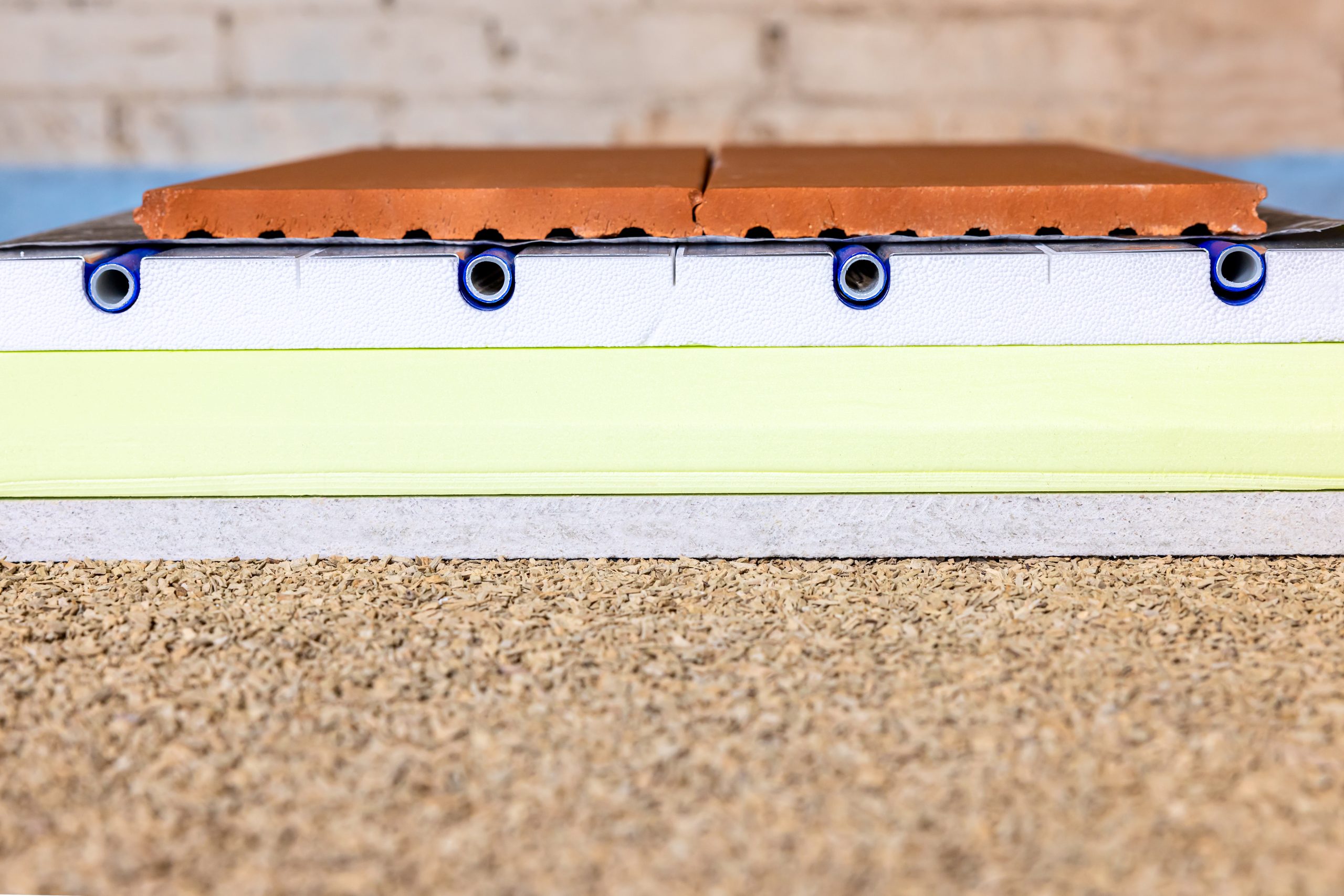
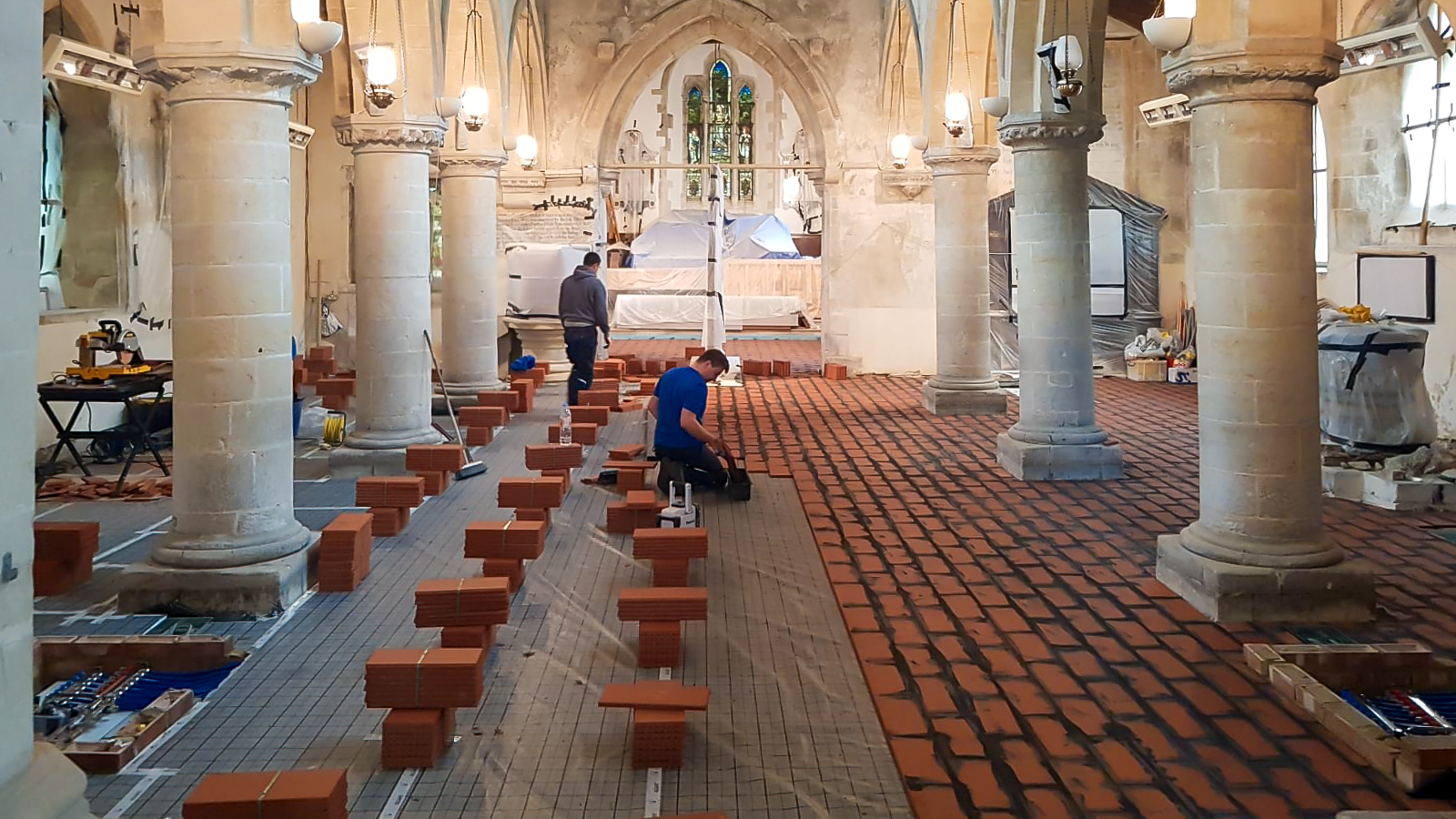
At 18 mm thick, the Screed Replacement Tile keeps the floor build-up thin and helps the heating system respond quickly. For areas up to 400 m², the system can also be installed without movement joints in the final floor finish.
Dry Levelling
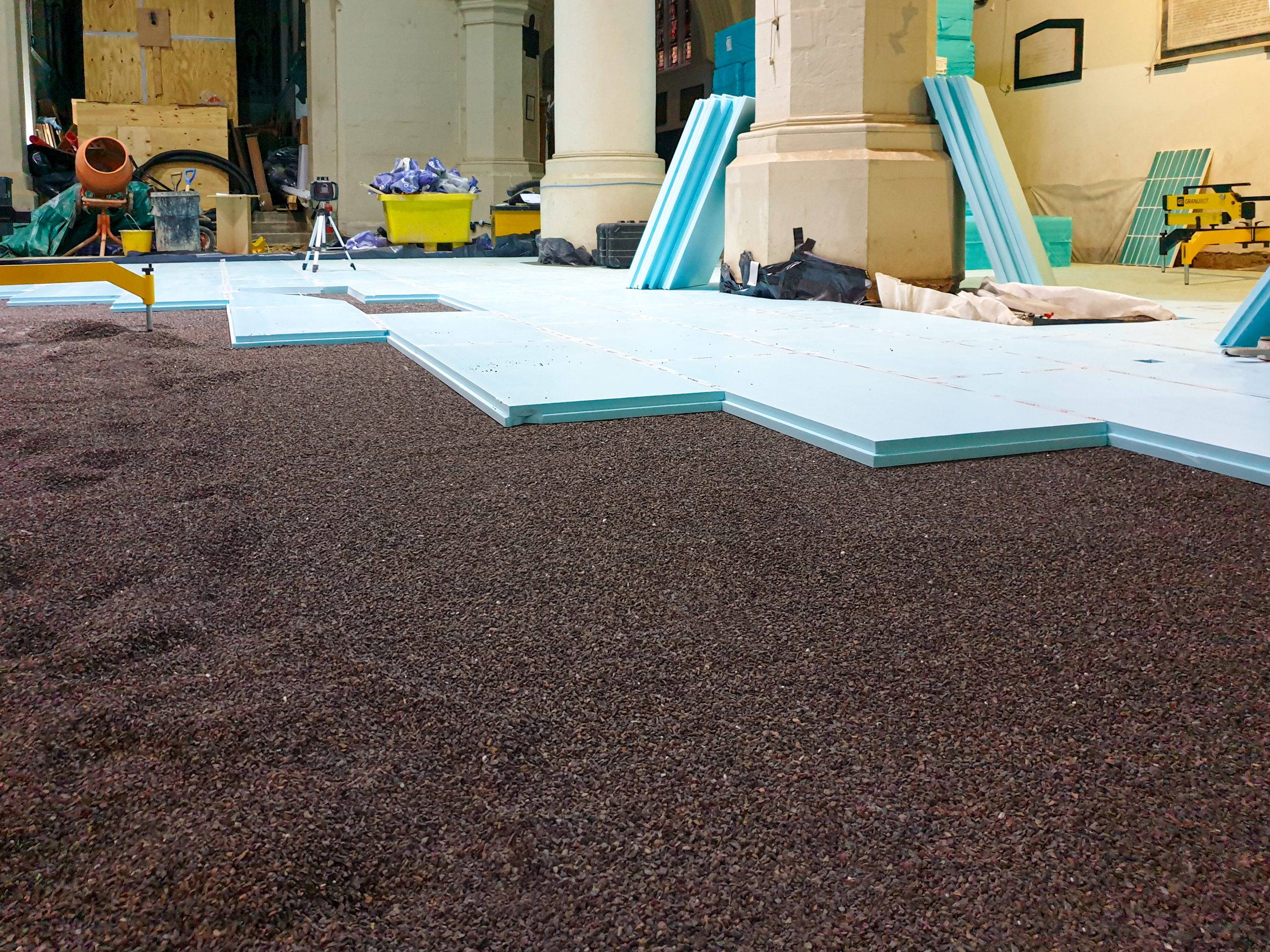
Dry levelling is another specialist part of our floor-construction work. We use laser-guided robotic equipment to level floors with a natural slate granulate.
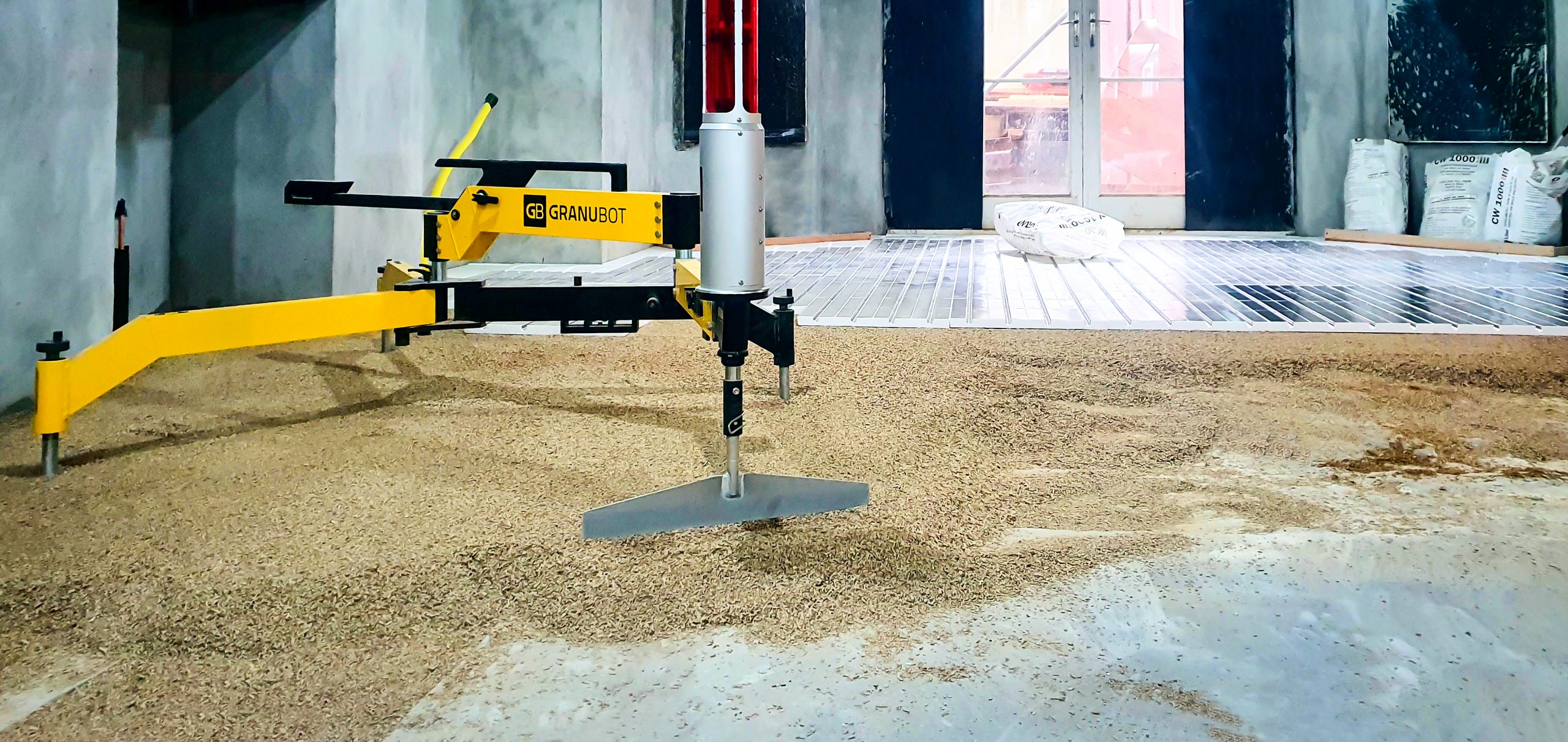
Technology
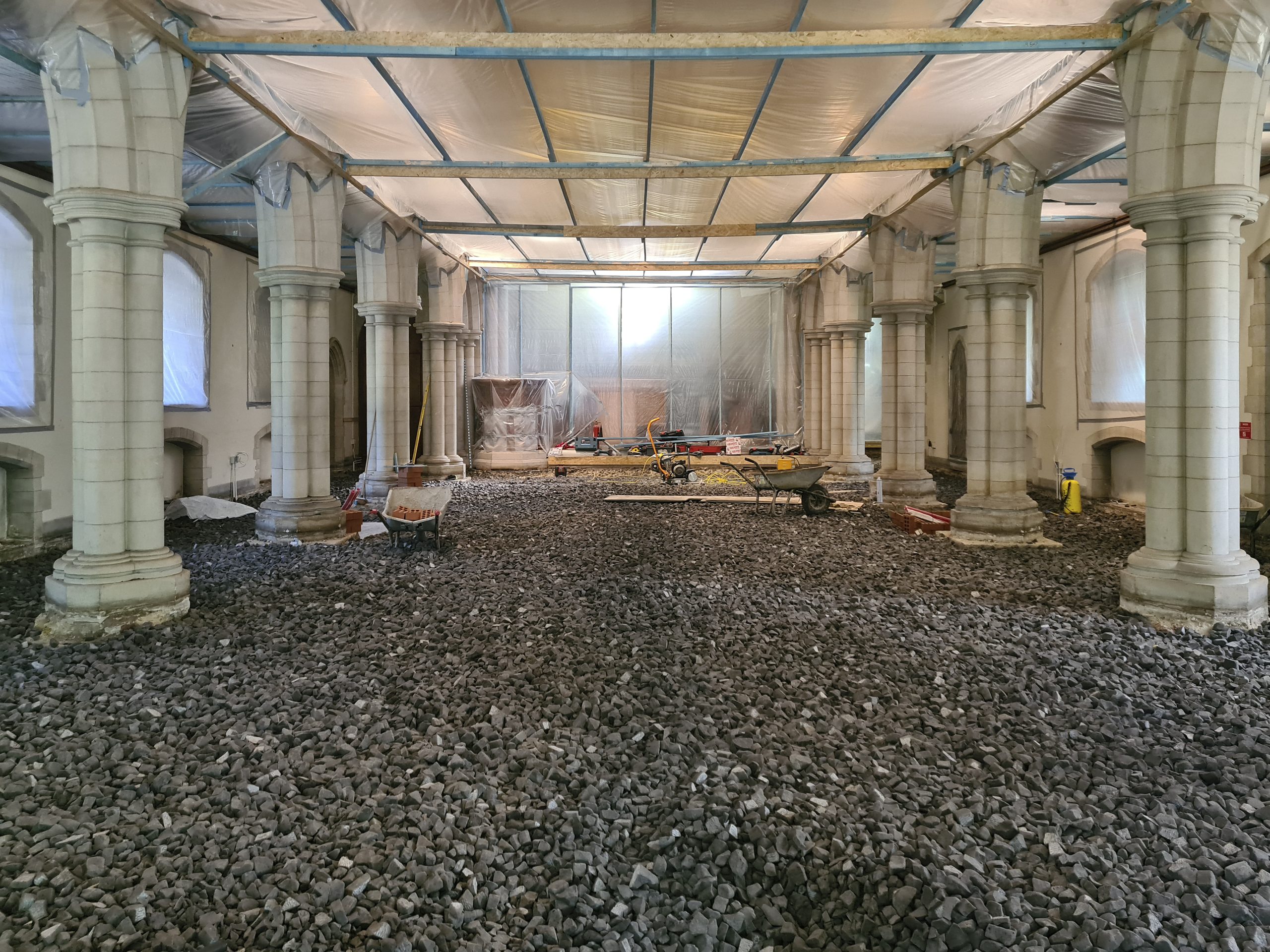
Glass Aggregate
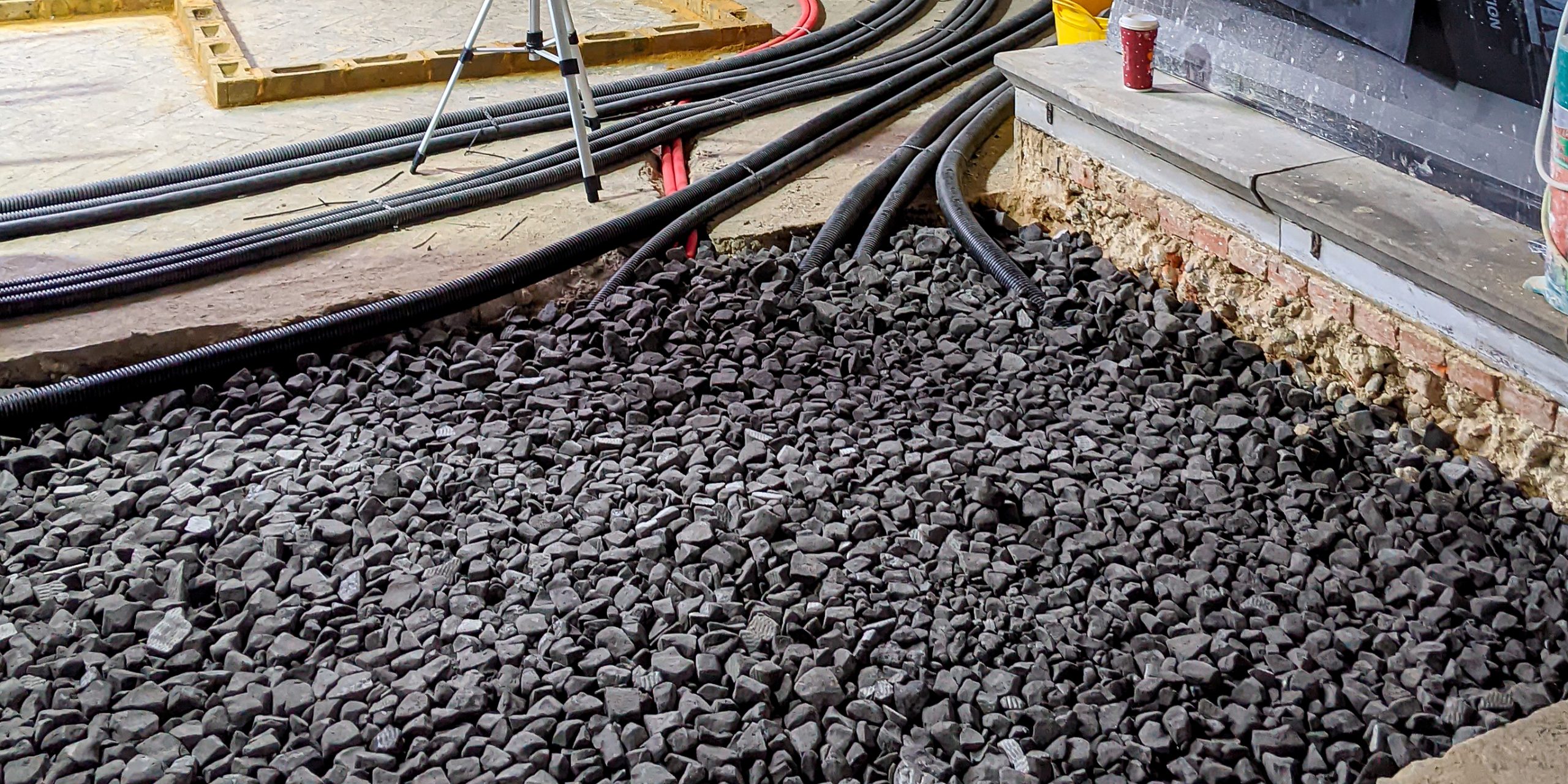
Where deep voids remain after excavation of historic floors, we use foam-glass aggregate as an alternative to hardcore and concrete. It fills the void while retaining breathability within the new floor construction.